Showing posts with label Vectors. Show all posts

Dangers at dusk: is it time to move beyond bednets?

I originally wrote this for The Guardian's "Write the World" International development journalism competition. You can see the winning pieces here, some of which are excellent. I'd particularly recommend "Aid: Dead or alive?" for a more balanced discusion of the benefits and pitfalls of western aid than you usually find in the papers.

Cattle amble lazily back to their night time pastures as the sun sets over the tiny Gambian village of Wellingara. In dusty compound courtyards women stoke the fires that will cook the evening meal of rice and oily stews, while in the streets their husbands wait for their dinner, brewing tooth-achingly sweet attaya tea over charcoal braziers. As the coals smoulder and light-hearted banter or serious matters of village politics fill the evening air you could be forgiven for thinking this was one of the most tranquil places on earth. But all is not as peaceful as it appears.

“You can tell the people who are not from around here because they fight themselves” laughs Tumani, a fieldworker for The Gambia’s Medical Research Council, as he demonstrates how foreigners slap their faces and arms when they feel mosquitoes landing. Locals enjoying the relative cool of the evening know instead to brush the pests from exposed skin, their hands in continuous, fluid motion. Whatever strategies are employed against it though, early evening mosquito biting before people go to bed is a problem which mosquito nets are unable to tackle.

Uptake of bednets in The Gambia has been extraordinarily successful, with almost three quarters of households estimated to own at least one. Although malaria-focussed health education campaigns have doubtless increased their use, like the elaborately carved hardwood beds bought for newlyweds bednets have become something of a status symbol with perceived benefits that go far beyond malaria control. They catch detritus falling from traditional thatched roofs, provide a measure of privacy in a country where large extended families typically share a compound and are appreciated as interior decoration. In the local markets gaudily coloured nets swing in the breeze, adorned with lacy ruffles like some bizarre cross between a jelly fish and a wedding dress. While there are of course caveats – many of the locally produced nets are untreated with insecticides that protect people sleeping against the nets from bites, and the youngest children most vulnerable to malaria may not be the ones sleeping under the nets – with malaria infections and deaths in decline in The Gambia, this tiny country provides an encouraging example of what could be achieved by widespread adoption of insecticide-treated bednets.


Unfortunately it seems that in some areas bednets are becoming victims of their own success. The most effective nets are those treated with pyrethroid insecticides, but in some parts of Africa populations of mosquitoes are evolving resistance to pyrethroids and as treated nets become more common resistance will offer a greater survival advantage and so is likely to spread through the population.

Concerns are also emerging that malarial mosquitoes may be changing their behaviour to bite earlier in the evening before people are protected by nets. To complicate matters humans are also changing their behaviour; particularly in urban areas where development may bring electric light and flickering televisions beaming Brazilian telenovelas or Kung Fu movies to rapt audiences, people are staying up later after sundown and remaining exposed to mosquitoes for longer. Taking into consideration the fact that malaria is not the only disease transmitted by mosquitoes - the species that transmits yellow fever, for example, is active at dusk – the importance of preventing early evening biting becomes increasingly apparent.

Large-scale mosquito control programmes, such as those treating water sources where mosquitoes breed with chemical or biological insecticides, have had impressive results in some areas but require a great deal of political will, organisation and stability to scale up and so may not be appropriate everywhere. Instead the use of repellents, chemicals that smell unpleasant to mosquitoes, is being suggested as an approach that can be targeted at the household level as bednets can.

Tourists and travellers visiting malaria-endemic areas have long protected themselves with DEET, the plastic-melting personal repellent that can be rubbed on skin, and with the development of gentler personal repellents such as those derived from lemon eucalyptus oil there has been interest in extending the benefits to the local population. This work is in its early stages, but results from work in Bolivia on the effects of personal repellents in addition to nets are encouraging. However, as campaigns to promote handwashing with soap in Africa have shown, encouraging a change in habits is difficult and attempting to foster a culture of repellent use from scratch where none existed before would be challenging to say the least.

Another approach is the use of spatial repellents, odorous chemicals which disperse and so could make a wide area, for example the veranda of a house, unattractive to mosquitoes. Here signs are perhaps more encouraging; families in The Gambia already regularly burn mosquito coils or local herbs to deter evening biting insects, and as our knowledge of mosquito behaviour and biology increases we will be increasingly well placed to evaluate the effectiveness of these particular blends and to design new mixtures of odours and methods of delivering them.

Of course the use of repellents may simply provide a different pressure for mosquito populations to evolve their way around. Peaceful as the streets of Wellingara may appear as the tropical sun slips below the horizon, in the ongoing war between humans and mosquitoes they are in fact a battle ground.
Attenborough’s Eye Worm

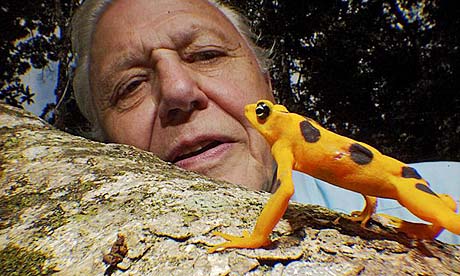
In a recent interview for the Radio times, the great David Attenborough discussed his opposition to creationism and was asked why he didn't give "credit" to God for the design of living things. He replied:

"They always mean beautiful things like hummingbirds. I always reply by saying that I think of a little child in east Africa with a worm burrowing through his eyeball. The worm cannot live in any other way, except by burrowing through eyeballs. I find that hard to reconcile with the notion of a divine and benevolent creator."


I'm not putting that quote up to get drawn into a discussion of what that implies for the existence or otherwise of a benevolent creator (if pressed I'd say there's been a lot of arrogance and intransience on both sides of the debate and I'd like to leave it at that*) but because, quite understandably, a lot of people have now heard of this blinding disease spread by flies and think it's what I'm working on, when in fact I'm working on an entirely different blinding disease spread by completely different flies. Confused yet?


The disease David Attenborough is referring to is Onchocerciasis or River Blindness, caused by parasitic worms spread by blackfly of the family Simuliidae. These blackflies are found close to running water as the larvae feed by anchoring themselves to stream beds and then straining food out of the passing currents with little fans. The female flies feed on human blood and are able to pierce human skin to get it. In doing so they are able to pick up baby worms (microfilariae) living under the skin. The worms then penetrate the gut wall and migrate to the flight muscles where they mature into juveniles, then travel to the poor fly's proboscis (they don't do the fly much good either incidentally) where they mature again into infectious juveniles and are able to enter the human body in saliva the next time the fly takes a meal. They then set up home in the subcutaneous tissue where they become adults and start churning out more microfilariae. This may all sound a bit complicated but the take-home message is that both humans and flies are needed for the worm to complete its lifecycle. It is the microfilariae that cause all the problems, provoking strong immune reactions especially when they die. In the skin this can produce irritating or painful dermatitis, but if the worms migrate into the cornea they can cause blindness.


As you should all know by now, because I've been banging on about in incessantly for the past six months, the disease I'm working on is called Trachoma. It's spread by Musca sorbens, which nasty as it is is not actually able to pierce skin to drink blood but instead laps secretions off the skin, most commonly tears. Unlike River Blindness which is most prevalent near the running water its blackfly vectors need (the clue is in the name!) Trachoma is most prevalent in dry, dusty places where people don't have water to spare to wash their faces. The disease is caused by a bacterium not a worm, and it infects the inside of the eyelid not the cornea – the damage to the cornea is caused indirectly by scratching from the inturned eyelashes. And unlike the worm that caused River Blindness, the bacterium that causes Trachoma doesn't need the fly to complete its lifecycle; whilst flies are a very efficient menas of dispering the bacterium, it could equally well be transmitted by dirty fingers or towels. The worm couldn't, as few towels have either flight muscles or probosces.


Hope that's cleared things up. Here are some nice pictures of nasty things from the Carter Centre:


*If pressed really hard, with pointy things, I'd say that there may or may not be a God but it'd be more productive if we all stopped bickering about it and got on with doing what God wants us to do/doing what we have to do because there is no loving guiding force, which is making the world a better place. And that really is the end of what I have to say on the matter.

Here comes the science part!

I feel it's about time to introduce Musca sorbens, the little fly I'm planning to spend the next three years beheading, mutilating, impaling, forcing to copulate according to my whims and, frankly, doing everything to short of donning a Halloween mask and phoning it up to ask it if it likes horror movies. But it's all in the name of science, and anyway the little bugger probably deserves it.

Musca sorbens is found in Sub-Saharan Africa, parts of Asia and Australia. It's actually reckoned to be a species complex rather than a single species - for those unfamiliar with the term, species complex basically means "They all look the bloody same to me, but different populations won't shag when we put them together in the lab and we can't afford to do the DNA work". I can't seem to find a good picture of them on Google images, but they look like a slightly smaller housefly with two stripes on the thorax and, on the evidence of the specimens I've seen so far anyway, they have large pins with type-written names through them.

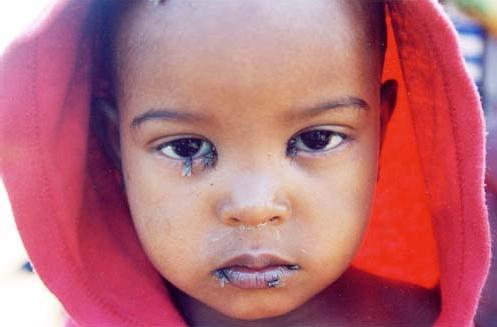
I'm reluctant to put up the pictures I have found of the flies, partly because they're so small but mostly because they make me sad, always showing them on beautiful kids:
I try to keep this blog quite light and funny, but on a purely emotional level pictures like this show why this sort of work is important. I find it very hard to understand how I live in a world with Ikea and Facebook and Angel boxsets and hazelnut latte, and on the same planet there are people living like this, who can't spare any of their two litres of water a day for washing, let alone spare 7p to buy soap.

M. sorbens adults feed on the dissolved salts and proteins in tears and snot, and in doing so transmit the bacterium responsible for trachoma. If you like looking at pictures of manky eyes (and hey, who am I to judge?) google trachoma, if you're eating your tea then don't. At first the infection seems just like conjuntivitis (or pinkeye for my American friends - who says you never learn anything from Southpark?) and eventually clears up on its own, making it pretty low on peoples' list of priorities. Repeated infections though cause scarring of the inner eyelid, causing it to contract and rolling the eyelashes inward so that they scrape the cornea whenever the sufferer blinks. As well as being excruciatingly painful, this scarring and possibly infection of the cornea leads to blindness. As it may be several decades between the initial infection and the development of trichiasis, people rarely associate the two.

The tragedy of all this is that flies seem to prefer the eyes of children to those of adults. There may be something in the tears and snot of children that's especially attractive to these flies or it may just be that, as anyone who's ever tried to get a four year old to blow their nose will tell you, kids are mucky little bastards and probably have rather more of the relevant secretions lying around. This is one of the things I'm hoping to find out. It has also been suggested in the same way that many other infections entities have evolved strategies to maximise their distribution (the cold virus makes you sneeze out an aerosol of cold viruses, the Guinea worm induces its victims to cool their burning sores in water into which it can release its young, if you have a Britney Spears song stuck in your head chances are you'll end up humming it and infect someone else), the trachoma bacterium may cause children's' eyes to water, attracting more flies to spread it. I'll also be looking at whether secretions from kids with trachoma are more attractive to flies than those of kids without (and any child found to have trachoma in the course of the study will get antibiotic treatment).

And this is the really sad thing - if you can't afford soap, you can't afford the really simple antibiotics to cure the results. As I may have observed on a previous occasion, the world's pretty messed up really.